Short answer
Many vegetables and some fruits do better with a pretreatment before freeze-drying. Penn State Extension says to pretreat for freeze-drying “the same” way you would for dehydrating (Penn State). That means an acid dip for fruits that brown, and blanching for most vegetables. Pretreating is mainly for color and quality. Penn State notes that acid dips and blanching also help destroy harmful bacteria during heat drying (Penn State), but freeze-drying itself “doesn’t kill illness-causing microorganisms” (UMN Extension).
On this page
Why pretreat?
Cut fruits and vegetables darken and soften because of enzymes. Penn State describes enzymes that “act like chemical scissors and cause the food to break down,” using a sliced apple as the example (Penn State). University of Minnesota Extension says pretreating “will limit darkening or browning by inactivating ripening enzymes” (UMN Extension).
Fruits: acid dips
Penn State’s drying guide, which its freeze-drying guide points to, gives these options for fruits such as apples, pears, peaches and apricots (Penn State):
| Dip | Amount | Time |
|---|---|---|
| Ascorbic acid (powder) | 3¾ tsp in 2 cups water | 10 minutes |
| Vitamin C tablets | 20 × 500 mg tablets, crushed, in 2 cups water | 10 minutes |
| Citric acid (powder) | ½ tsp in 2 cups water | 10 minutes |
| Bottled lemon juice | Equal parts lemon juice and water | 10 minutes |
UMN gives a more dilute dip for produce that can’t be blanched: “one teaspoon ascorbic acid to one gallon of cool water” (UMN Extension). Utah State lists ascorbic acid or lemon juice for fruit “to prevent browning” (USU Extension).
Shop ascorbic acid powder on Amazon →
Berries with skins (blueberries, cranberries): Penn State dips them briefly in boiling water to crack the skins, then chills them quickly and blots them dry (Penn State).
Vegetables: blanching
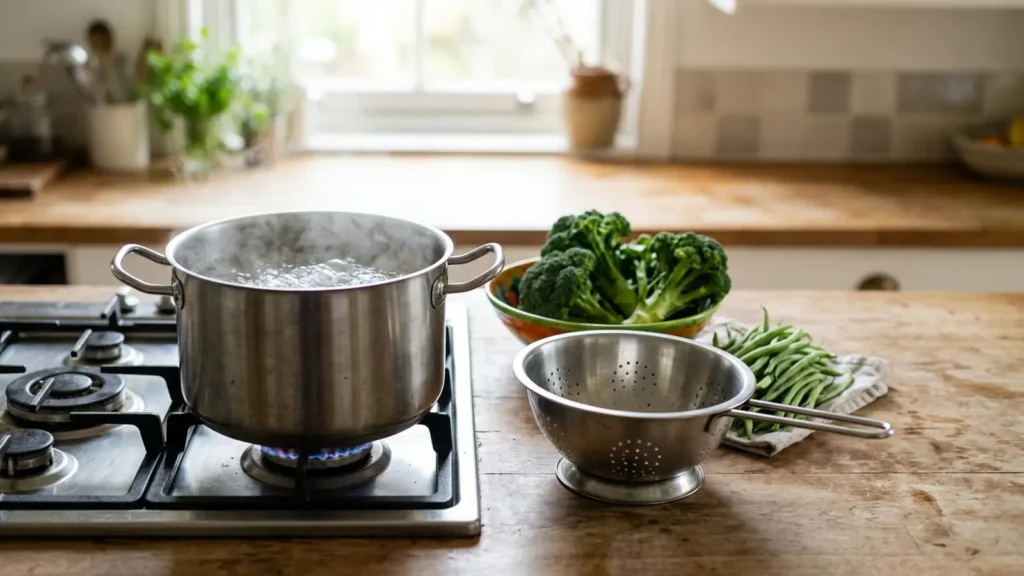
- Most vegetables: Penn State recommends blanching “in a solution that contains 1/4 teaspoon of citric acid per quart of water,” or steam blanching (Penn State). Utah State lists “blanch or steam to inactivate enzymes, preserve color, flavor, and nutrients” (USU Extension).
- No blanching needed: “Onions, garlic, peppers, and herbs do not need blanching” (Penn State).
- Why it helps drying: Blanching “softens the cell structure, allowing moisture to escape,” so pieces dry and later rehydrate faster, in Penn State’s dehydrating guide (Penn State).
For blanching times by vegetable, use your extension service’s blanching chart. Times vary by vegetable and piece size.
After pretreating
- Drain. Penn State says blanched vegetables “should be drained” (Penn State).
- Cut evenly. Penn State: cut food “into equal-sized portions so that the product freeze-dries at the same rate” (Penn State).
- Load in a single layer with space between pieces (USU Extension), and keep food below the tray rims, since “some products expand when freeze-dried” (Penn State). If you’re filling several trays, the batch planner suggests per-tray loads and groups foods with similar drying times.
- Test for doneness before packaging, as UMN advises, rather than relying on the preset alone (UMN Extension).
Shop silicone tray mats on Amazon →
Washing comes first
Penn State says produce should be washed “by rinsing, gently rubbing, or scrubbing with a clean vegetable brush under cold running water,” and adds “do not soak produce in water” (Penn State).
What freeze-drying won’t fix
Pretreating improves quality, but freeze-drying “does not kill bacteria and/or other microbes. It preserves them” (USU Extension). Start with clean produce, clean equipment and clean hands. For which foods work well, see our common foods guide and best foods for beginners.
FAQ
Do I have to pretreat? It’s mainly a quality step. Unpretreated apples or pears may darken. Peppers, onions, garlic and herbs don’t need blanching (Penn State).
Can I freeze-dry store-bought frozen vegetables without blanching? See the frozen-vegetables entry in our beginner foods guide.
Sources
- Penn State Extension: Let’s Preserve: Freeze Drying: https://extension.psu.edu/lets-preserve-freeze-drying
- Penn State Extension: Let’s Preserve: Drying Fruits and Vegetables: https://extension.psu.edu/lets-preserve-drying-fruits-and-vegetables
- University of Minnesota Extension: Freeze-drying: https://extension.umn.edu/food/preparing/cooking-at-home/food-preservation/freeze-drying
- Utah State University Extension: Can I Freeze Dry That?: https://extension.usu.edu/foodsafety/research/can-i-freeze-dry-that-a-practical-guide-to-safe-and-effective-freeze-drying